
For a team entering the World Baseball Classic as defending champions, the margin for complacency is zero. Yet Samurai Japan’s 4–3 exhibition loss to the Orix Buffaloes at Kyocera Dome Osaka exposed cracks that cannot be dismissed as mere “pre-tournament rust.”
This was not a narrow defeat against an MLB All-Star roster. It was a loss to a domestic NPB club, a disciplined, talented side, yes, but still a league opponent facing a national squad stacked with major leaguers and NPB all stars. For a team preparing to defend its world title, that distinction matters.
Yusei Kikuchi’s First-Inning Collapse Sets the Tone
Left-hander Yusei Kikuchi was handed the ball to set the tempo. Instead, he surrendered it almost immediately.
Three runs (two earned) crossed the plate in the opening frame. Six hits allowed over four innings. Just two strikeouts. No walks, but that’s hardly reassuring when opposing hitters are squaring up early-count pitches with authority.
Kikuchi later described the first inning as a learning experience. That may be true. But in a short-format tournament like the WBC, first-inning turbulence can bury you before adjustments are even possible. Japan opens against Taiwan and follows with a high-pressure clash versus South Korea. There is no runway for slow starts.
If Kikuchi is slated to start against South Korea, the Buffaloes provided a troubling blueprint: attack him early, force him into the zone, and capitalize before he settles.
Shohei Ohtani’s Quiet Night Raises Timing Concerns
All eyes were on Shohei Ohtani in his first exhibition appearance with the national squad this cycle. The result: 0-for-3.
- Flyout to left (1st inning)
- Swinging strikeout (4th inning)
- High flyout to left (7th inning)
No hard-hit statement swing. No opposite-field authority. No baserunner impact.
Exhibition numbers don’t count in the standings, but they reveal timing. Ohtani looked a half-beat late on premium velocity and slightly out front on off-speed offerings. Against Pool C pitching, that margin shrinks even further. Japan’s offense is constructed around pressure and depth, but Ohtani remains the gravitational force. If he is not locked in, opposing staffs can pitch more aggressively to the rest of the lineup.
Masataka Yoshida’s Statement
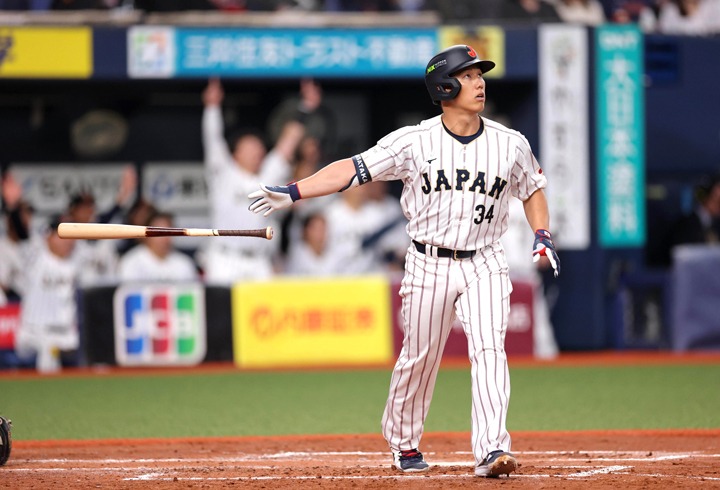
The lone authoritative swing from Japan’s MLB contingent came from Masataka Yoshida, and it arrived against his former club.
Yoshida turned on an inside cutter in the fifth inning and launched a solo shot into the upper deck in right field. It cut the deficit to 3–1 and briefly shifted momentum.
But the symbolism cuts both ways: the only MLB bat to decisively solve Orix pitching was one molded in the NPB system the national team just failed to overpower.
Offensive Urgency Came Too Late
Japan trailed 3–0 before Yoshida’s blast. They trailed 4–1 entering the late innings.
Catcher Kenya Wakatsuki delivered an eighth-inning RBI double. DeNA slugger Shugo Maki followed with a run-scoring double in the ninth to trim the margin to one. But the rally felt reactive, not commanding.
Against a league opponent, Samurai Japan should dictate tempo. Instead, they chased it.
The inability to generate early pressure, particularly from the top half of the lineup, is a concern. Tournament baseball punishes passivity. One or two empty innings can swing an entire group-stage trajectory.
Sugano Provides Stability
Right-hander Tomoyuki Sugano offered two scoreless innings in relief, mixing speeds effectively and limiting damage. It was a composed outing and arguably Japan’s sharpest pitching display of the night.
Yet relief steadiness does not erase a shaky first inning from your projected tournament starter.
Manager Hirokazu Ibata emphasized improvement and preparation. Public calm is expected. Internally, however, the staff must be evaluating whether roles, pitch sequencing, or even workload distribution need recalibration before Friday’s opener.
Bigger Picture: Why This Loss Matters
Exhibition games are not about the scoreboard, until they are.
Losing 4–3 to a reigning NPB powerhouse like Orix is not inherently embarrassing. But context matters:
- Japan fielded multiple MLB players.
- Ohtani was in the lineup.
- Kikuchi was preparing for a WBC start.
- The opponent was a club team, not an international rival.
The defending champions are supposed to impose dominance, even in tune-ups. Instead, they were exposed early, chased from behind, and finished just short.
Momentum heading into a condensed international tournament is fragile. Confidence, timing, and early-inning command are not luxuries, they are prerequisites.
Samurai Japan still has elite talent. But based on Monday’s performance at Kyocera Dome Osaka, they do not yet resemble a team ready to defend a global crown without turbulence.
Their final warm-up against the Hanshin Tigers now carries more weight than anyone expected.