

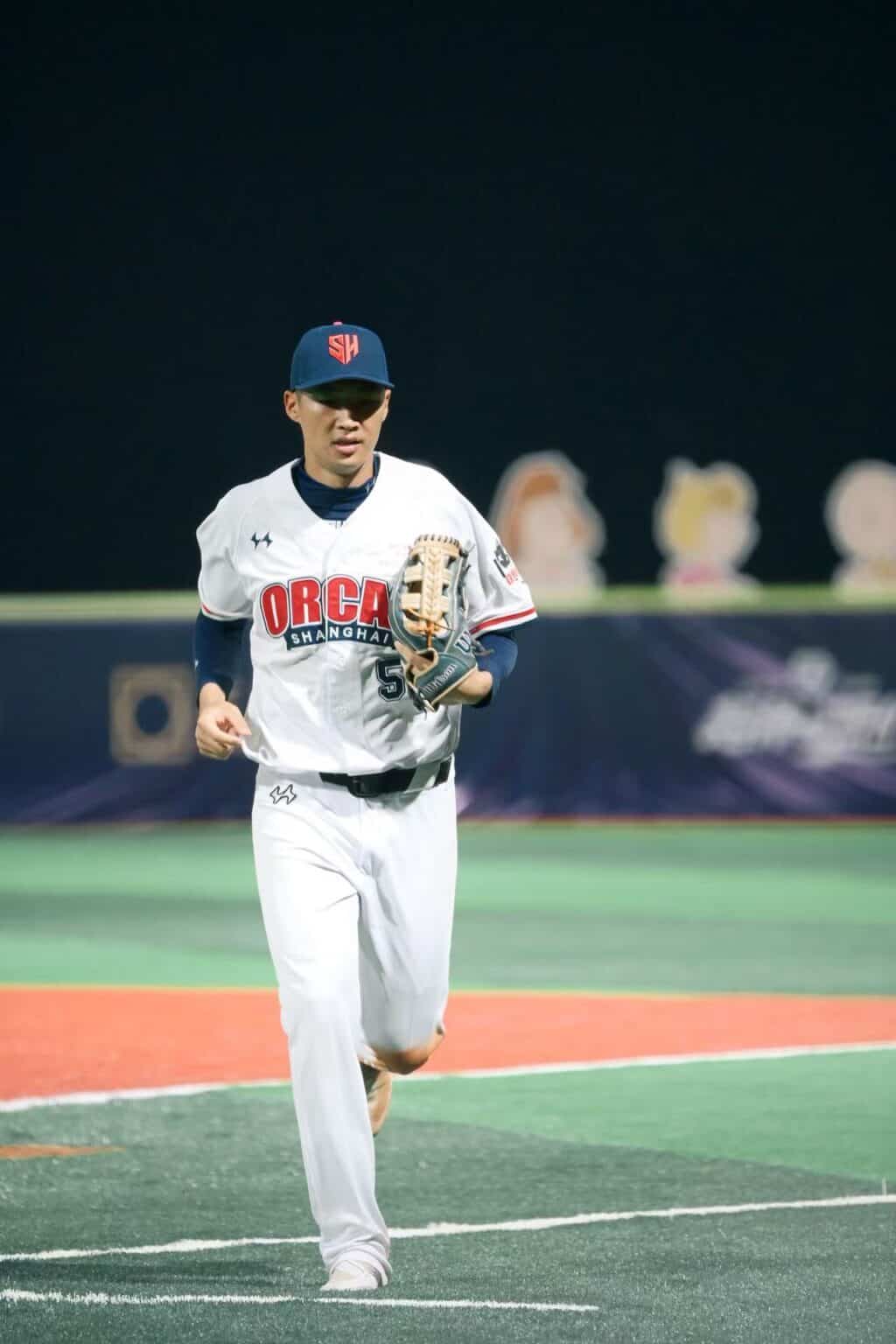

What’s that thing they say about never meeting your heroes because it’ll only lead to disappointment? Well, good luck convincing Kou Yongkang that it’s true.
The rising Chinese star came up close to his hero – to everyone’s hero – in the two-way threat and walk-up Hall of Famer Shohei Ohtani at the World Baseball Classic (WBC) back in 2023, and Kou’s life has never been the same since.
“You know, I wasn't nervous,” says Kou. “I just went in thinking it would be a good thing to play against him. I ground out to shortstop but at that moment I was not scared or anything, I was just grateful for being able to play against a player like Ohtani. I was happy to be there, in that moment, and in that moment I realised that this was where I belong, playing baseball against the best.”
It’s a story that reveals a lot about Chinese baseball, too, and about where it is and where it wants to be. The China team was drawn against Japan, and superstars such as Ohtani and pitcher Yoshinobu Yamamoto, at that WBC, and they lost 8-1 at the Tokyo Dome to a side that went unbeaten on their way to the title. But the Chinese players got a taste for what the game can be, at its very best. And they walked away wanting more.
“For us players, this was something we had never seen in China. There was such a big crowd, the intensity, the camaraderie,” says Kou, a right-handed pitcher, and a left-handed batter, who’s not averse to spending his time in the outfield.
“The atmosphere of the fans, the level of play that they were able to see was just so shocking to us. But now we are here, and we are starting to build that experience for players and for fans, right here in China.”
Kou – who sometimes also likes to be known as Coco Kou – was speaking on the sidelines of the Chinese Professional Baseball league’s opening weekend, as everyone involved in Shanghai waited for a break in the rain. The 25-year-old has signed for the Shanghai Orcas and is part of the league’s second season, being played over the next month over a maximum of 54 regular-season games and between six teams.
For Chinese players, it’s all about opportunity, what with baseball returning to the Olympic family for the Los Angeles Games in 2028, and with the country’s junior teams starting to make their presence felt on the international stage.
Kou is part of the first generation of Chinese players to have turned the heads of international scouts. He came through the Chinese school and national junior squad systems, was noticed and picked up by the Major League Baseball (MLB) China Development Centre in Beijing, and he signed for the Milwaukee Brewers in February 2019, attending spring training the next season before Covid came and it cruelled his hopes of progressing further.
“To get to the MLB DC was the dream that all young Chinese players have,” says Kou, who ended up training under Ray Chang, the Chinese-American ground-breaker who played 12 seasons of minor league ball in the United States.
“What we knew was that we could train, we could learn and maybe one day we could go and play in the United States, and have all the scouts watch us.”
It’s become the same deal for those who make the national squad as China has its eyes squarely set on the LA party. There was a breakout effort for Kou at the Hangzhou Asian Games in 2023, and he walked away having batted .391 with nine hits and a two-run homer against Japan in the bronze medal game (there was no Ohtani, and Japan won a 4–3 thriller).
At the CPB, Kou is among the 79 locals spread across the six franchises, and he wants to make himself known.
“When people in China ask what I do and I say I am a baseball player, I used to have to explain what that means,” says Kou. “But things are changing, and they are getting better for us all.”
At the time of writing Kou had played one game for Shanghai, finishing with a hit as they lost 9-5 to the Xiamen Dolphins on opening night, and his Orcas were sitting 0-2. To follow the CPB, head here
One thought on ““Facing Shohei Ohtani proved that I belong””
This competition carries the hopes of so many people, and I sincerely see Chinese baseball thriving!