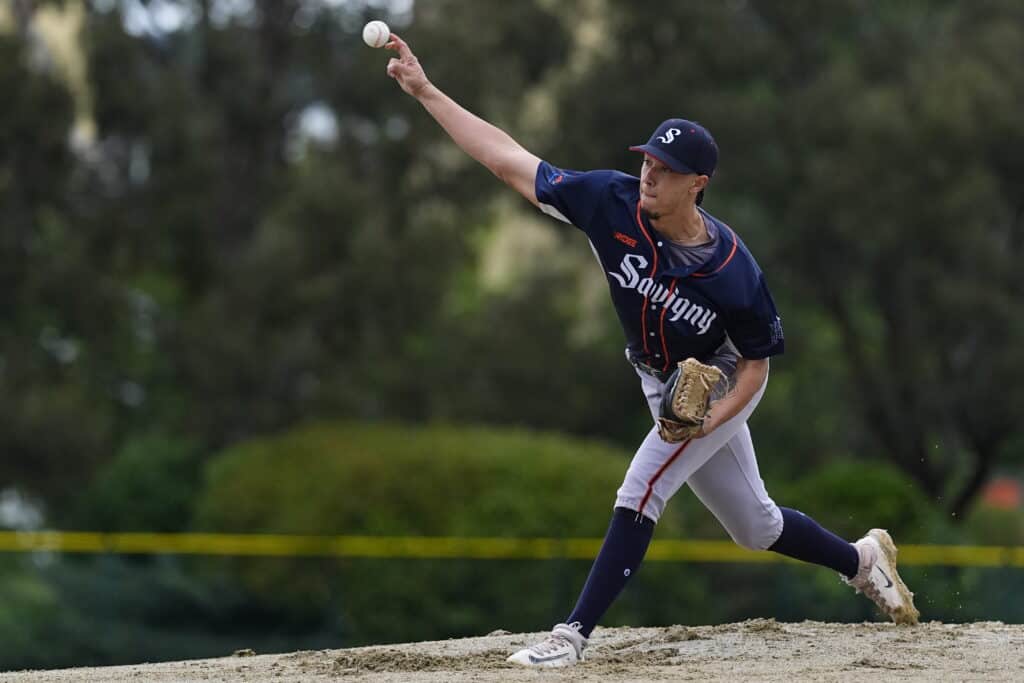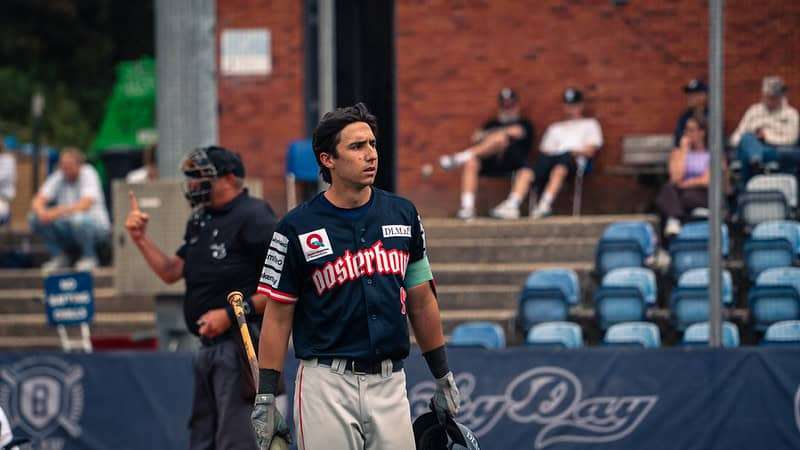

Oosterhout Twins’ first playoff victory in club history is no longer a final result. Amsterdam Pirates successfully protested a controversial hidden-ball play from Game 2 of their 2026 Lucky Day Honkbal Hoofdklasse semifinal, meaning the 1-0 Twins victory will be resumed from the seventh inning on Saturday, August 29 at 12:00 local time. The ruling changes the current series record to 2-0 in favor of Amsterdam, putting Pirates one victory away from the Holland Series.
What initially appeared to be one of the greatest days in Oosterhout Twins history has developed into one of the most unusual playoff situations in recent Dutch baseball.
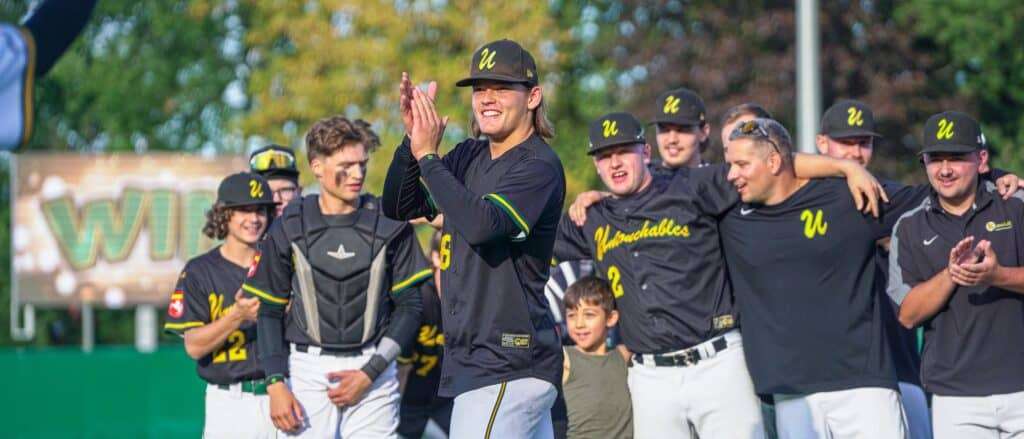
Twins defeated Amsterdam Pirates 1-0 in ten innings on Saturday, August 22, after neither team scored through nine regulation innings. Oosterhout celebrated the result as its first-ever playoff victory, with Ayumu Ishikawa earning the win after combining with Wyatt Lankford to keep Amsterdam scoreless. Twins itself described the result as its first victory in a Hoofdklasse semifinal series.
But the final score did not tell the complete story.
A disputed hidden-ball trick in the seventh inning led Pirates to protest the application of the rules. After a complicated sequence in which the protest was initially withdrawn and subsequently resubmitted, the protest has been granted and the game will now be continued from the point of the disputed play.
As a result, Twins’ historic first playoff win is officially on hold.
Hidden-ball trick involving Terrence Garcia and Ayumu Ishikawa sparks controversy
The incident occurred in the top of the seventh inning with the game still scoreless.
Amsterdam’s Brendly Martina had reached first base. During the sequence that followed, Oosterhout Twins executed a hidden-ball trick involving infielder Terrence Garcia and pitcher Ayumu Ishikawa.
Garcia retained possession of the baseball while Martina believed the ball had been returned toward the pitcher. When Martina came off first base, Garcia tagged him.
The umpiring crew called Martina out.
What followed was immediate confusion.
The game was temporarily interrupted as the umpires discussed the situation and consulted with the official scorers in an attempt to determine the correct ruling. After the discussion, the original decision remained in place and Martina was ruled out.
Pirates disagreed with the application of the rule and announced that the game was being played under protest.
That distinction is important. A protest is not intended to challenge an umpire's factual judgment — such as whether a tag was made — but can be used when a team believes an umpire has incorrectly applied a playing rule. The KNBSB's own protest regulations explicitly make that distinction.
And in this case, the 2026 rulebook contains a highly significant provision specifically covering the hidden-ball trick.
The 2026 KNBSB hidden-ball rule is crucial
The controversy centers on Rule 13.10.12 of the 2026 KNBSB Baseball Rules.
For 2026, the Dutch federation adopted rules based on the WBSC Official Rules of Baseball 2025-2026. The KNBSB specifically highlighted a change concerning hidden-ball plays in its list of rule amendments for the new season.
Rule 13.10.12 states that during a hidden-ball play, a pitcher who does not possess the baseball may not have one or both feet anywhere on the gravel or dirt circle of the pitching mound.
That wording is especially significant because it is stricter than the rule familiar to many players and officials from previous versions of the Official Baseball Rules.
Under the new KNBSB wording, the restriction is not limited to standing on or straddling the pitching rubber. The pitcher cannot be on any part of the dirt circle during the hidden-ball attempt while another defender possesses the ball.
The KNBSB rulebook even lists this provision among the changes introduced for the 2026 season, stating that a pitcher without possession of the ball may not have either foot on any part of the mound circle during a hidden-ball play.
That rule became central to Amsterdam's protest concerning Ishikawa's position while Garcia retained the ball.
The later conclusion communicated in connection with the protest was that the rule had not been applied correctly during the game.
Pirates initially withdraws protest before submitting it again
The procedural story became almost as complicated as the play itself.
Pirates initially protested the ruling while the game was still being played, allowing the contest to continue to its conclusion.
Twins eventually won 1-0 in the tenth inning when Faas Sluijter scored the only run of the afternoon following a throwing error during the WBSC tiebreak.
After the game, however, Amsterdam initially indicated that it would not continue with its protest.
That appeared to make the 1-0 score final.
The situation changed again after an umpire informed Pirates that the original interpretation of the hidden-ball situation had not been correct under the applicable 2026 rules.
Amsterdam subsequently submitted the protest again.
That sequence generated questions over whether the renewed protest had been made within the required time.
Was Amsterdam Pirates' second protest too late?
The KNBSB regulations provide two separate deadlines that are important in understanding the discussion.
Under Article 7.1(b) of the 2026 Reglement van Wedstrijden, a protesting team must inform the plate umpire and the opposing team within 15 minutes after the game whether it intends to continue with the protest.
The formal KNBSB protest form must then be submitted to the federation within 48 hours after the game. Additional statements can also be submitted within that same 48-hour period.
Because Pirates initially withdrew and later resubmitted its protest, there has been speculation over whether that sequence should make the protest inadmissible.
However, the KNBSB regulations also state that the federation's Competitions Department, together with the chair of the relevant Protest Committee, determines whether the administrative requirements for a protest have been satisfied.
The operative decision communicated in this case is that the protest has been granted and Game 2 must be resumed.
There is therefore currently no basis for treating the original 1-0 Twins victory as a completed playoff result.
The rules also state that there is no appeal against a decision of the Protest Committee, although the committee itself can reconsider a decision if new facts make that necessary.
At the time of publication, the KNBSB's public page listing 2026 Protest Committee decisions had not yet been updated with the Pirates-Twins case.
Physical confrontation adds to chaotic aftermath in Oosterhout
The uncertainty surrounding the protest was compounded by an off-field incident following the game.
World Baseball News was informed that a physical confrontation broke out involving individuals connected with Amsterdam Pirates and Oosterhout Twins supporters. Medical assistance was reportedly required following the incident.
The confrontation is separate from the baseball ruling and does not determine whether Amsterdam's protest was filed correctly. No individual responsibility for the incident is being assigned here.
However, the disorder formed part of an already confusing postgame period in which the status of the Pirates protest was changing.
Despite speculation that this may have affected the timing of Amsterdam's renewed submission, the protest has been accepted and the continuation of Game 2 is now the decision governing the semifinal.
What happens to Game 2 now?
The most unusual consequence is that a game which had already gone ten innings and produced a 1-0 winner will effectively travel backward three innings.
Game 2 will resume on Saturday, August 29 at 12:00 local time in Oosterhout from the seventh inning, at the point where the disputed hidden-ball play occurred.
The score will once again be 0-0.
Brendly Martina will be restored as Amsterdam's baserunner at first base, with the game continuing from the situation surrounding the protested play.
This follows the KNBSB rule governing successful protests. Rule 7.12.4 states that when a protest is upheld and the disputed decision could have affected the result, the game is replayed from the moment of the protest, rather than being restarted from the first inning.
Everything that happened after that point in the original Game 2 — including the scoreless eighth and ninth innings, the tenth-inning tiebreak and Sluijter's winning run — no longer determines the official result.
The two teams now have to finish the game again.
Amsterdam Pirates now leads semifinal 2-0
The successful protest also produces an unusual-looking series score.
Pirates won the opening game of the best-of-five semifinal 8-1 in Amsterdam.
The disputed second game is now unfinished.
Game 3, which was played Sunday before the protest ruling changed the status of Game 2, ended in a 9-4 Amsterdam victory.
That means Amsterdam's two completed victories are now Games 1 and 3.
Current series status: Amsterdam Pirates leads Oosterhout Twins 2-0, with Game 2 still to be completed.
It is a rare situation in which the third game of a series has officially produced the second completed win.
More importantly, it puts Pirates on the brink of the Holland Series.
Pirates can clinch Holland Series place in resumed Game 2
The stakes at 12:00 on Saturday could hardly be higher.
If Amsterdam wins the resumed Game 2, Pirates will have three victories and will immediately win the best-of-five semifinal.
That would send Amsterdam to the 2026 Holland Series.
If Oosterhout manages to reproduce its original result and wins the resumed game, Twins will finally receive its first official playoff victory and the series will move to 2-1.
That would keep Oosterhout's season alive and make the scheduled fourth game necessary.
In other words, Twins must effectively win the same game twice if it wants its August 22 breakthrough to survive in the record books.
Twins’ first playoff win has to wait
That may be the most painful consequence for Oosterhout.
When Faas Sluijter crossed home plate in the tenth inning on August 22, Twins believed it had achieved a major milestone.
The club had reached the playoffs and beaten one of Dutch baseball's traditional powers 1-0, ending ten innings of outstanding pitching with a walk-off victory.
Lankford had worked six scoreless innings before Ishikawa continued the shutout, while Pirates starter Dennis Burgersdijk had thrown nine scoreless frames on the other side. Oosterhout's own account celebrated the afternoon as a historic first semifinal victory.
For now, that win no longer exists as a completed result.
Twins can still make history Saturday. If it wins the resumed Game 2, the victory would once again become the club's first playoff win.
But until the remaining innings have been played, Oosterhout Twins is still waiting for the first playoff victory in club history.
Hidden-ball trick turns into defining moment of Pirates-Twins semifinal
A play designed to catch a runner momentarily unaware has instead changed the entire complexion of the series.
Terrence Garcia and Ayumu Ishikawa appeared to have successfully executed one of baseball's rarest defensive tricks. The on-field ruling gave Twins an important second out in a scoreless playoff game, and Oosterhout eventually went on to win in extra innings.
But the 2026 KNBSB rules contain a specific restriction governing the pitcher's location during exactly that type of play.
The subsequent protest has now removed Twins' 1-0 victory from the completed series results and given Amsterdam a potential opportunity to reach the Holland Series before Game 4 is even played.
Updated Amsterdam Pirates vs Oosterhout Twins semifinal
Game 1: Amsterdam Pirates 8-1 Oosterhout Twins
Game 2: To be resumed from the seventh inning — 0-0
Game 3: Amsterdam Pirates 9-4 Oosterhout Twins
Series: Amsterdam Pirates leads 2-0
Saturday, August 29
12:00 local time: Resumption of Game 2 in Oosterhout
If Amsterdam wins: Pirates advances to the Holland Series, 3-0.
If Oosterhout wins: Twins records its first playoff victory and the semifinal continues with Amsterdam leading 2-1.
A game that appeared to have ended with a historic Oosterhout celebration will therefore restart one week later — and this time, the same seventh-inning baserunner will be back at first base.