Cody Bellinger Injury Update: Yankees All-Star Out Four to Six Weeks With Grade 2 Hamstring Strain
Cody Bellinger will miss four to six weeks with a Grade 2 hamstring strain. Read the injury update, recovery timeline and Yankees impact.
 World Baseball News Editorial Team , 5 min read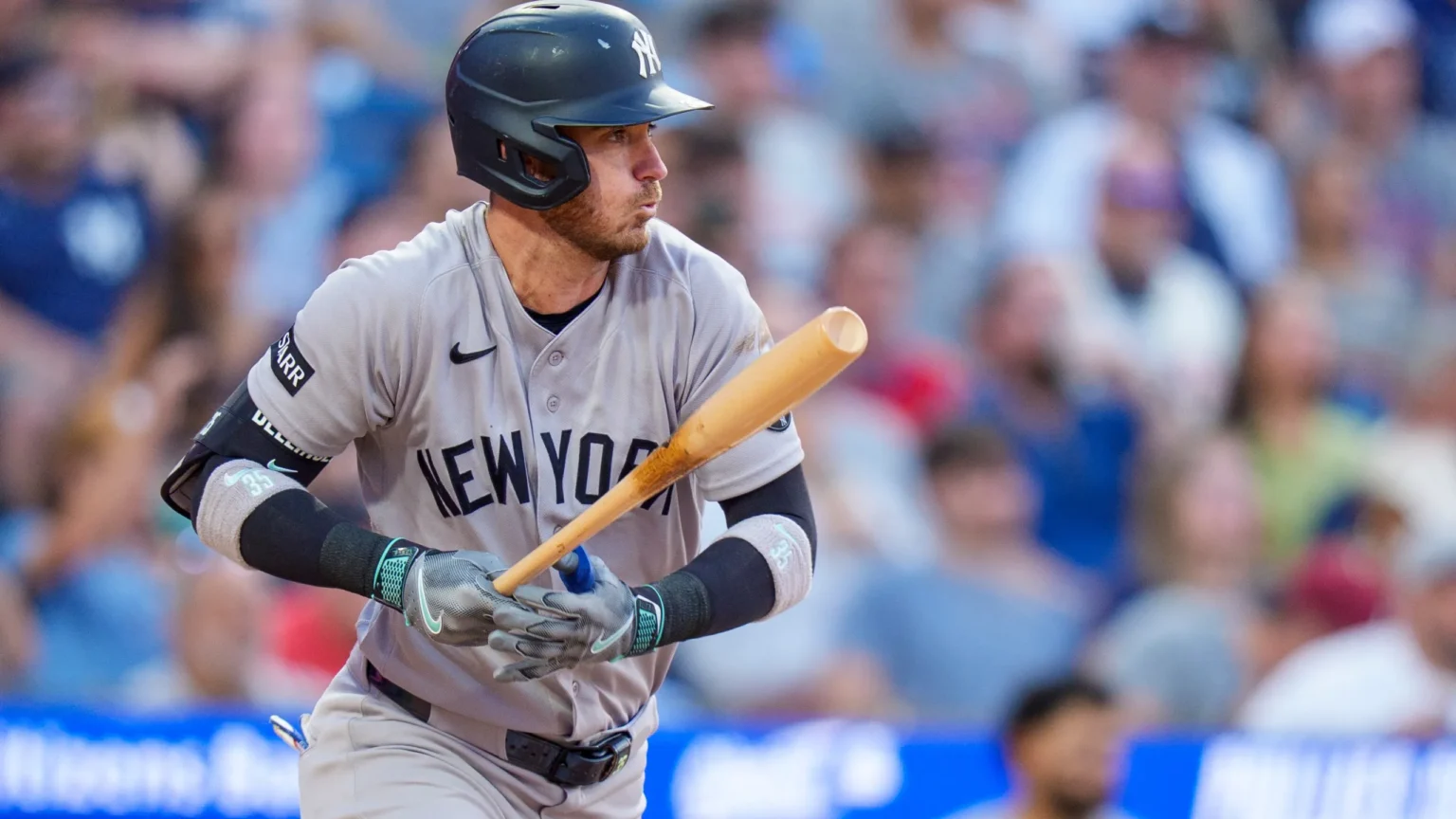
New York has lost another central part of its lineup after an MRI confirmed a significant left hamstring injury for Cody Bellinger.
Cody Bellinger is expected to miss four to six weeks after being diagnosed with a Grade 2 strain of his left hamstring, leaving the New York Yankees without one of their most productive and versatile players during a critical stage of the American League playoff race.
An MRI performed in New York on Monday confirmed the extent of the injury. Bellinger had already been placed on the 10-day injured list Sunday, but the official diagnosis established that his absence will extend well beyond the minimum period. The Yankees’ current timetable points to a possible return in late August at the earliest, with the first week of September representing the longer end of the estimate.
How Cody Bellinger suffered the hamstring injury
Bellinger injured his left hamstring while running out an eighth-inning double during New York’s 3-1 victory over the Philadelphia Phillies on July 25.
After driving a ball against reliever Jonathan Bowlan, Bellinger felt his hamstring grab as he rounded first base. He initially remained at second and waved away manager Aaron Boone, but his movement became noticeably restricted. After Trent Grisham grounded out, Bellinger walked slowly toward the dugout and went directly into the clubhouse tunnel.
Max Schuemann replaced him in left field for the bottom of the inning. Bellinger later indicated that he would have struggled to score had another ball been put in play, making his removal necessary despite his initial attempt to stay in the game.
The 31-year-old performed light agility work the following day, but the MRI showed that the injury was more substantial than the tightness initially described. The Yankees have not announced a fixed return date, and Bellinger’s progression through running, defensive work and live hitting will determine whether he can return near the beginning or end of the four-to-six-week window.
Bellinger’s 2026 statistics underline the size of the loss
Bellinger had played in 102 of the Yankees’ first 104 games before the injury, providing durability at a time when several other prominent New York hitters were unavailable.
He is batting .259 with a .350 on-base percentage and a .420 slugging percentage, producing 21 doubles, 11 home runs and 53 RBIs. He has also drawn 55 walks, helping him remain an important on-base presence even during stretches when his power production declined.
His situational production has been particularly valuable. Bellinger has hit .338 with a .402 on-base percentage and a .488 slugging percentage with runners in scoring position. With two outs, he has recorded a .310/.428/.587 slash line, driving in 32 runs in those situations. Those numbers demonstrate why replacing his overall contribution will require more than simply inserting another outfielder into the batting order.
Bellinger had experienced a lengthy power drought before the injury. His double in Philadelphia extended his homerless run to 31 games, with his most recent home run coming against the Chicago White Sox on June 17. However, he had shown signs of emerging from the slump, including a go-ahead RBI single earlier in the same game in which he injured his hamstring.
His underlying contact numbers also suggested that his results had not completely reflected the quality of his batted balls. Bellinger entered the injured list with a .339 weighted on-base average and a .350 expected weighted on-base average, along with an average exit velocity of 89.1 mph.
Yankees also lose an elite defensive left fielder
Bellinger’s absence creates an equally significant problem in the outfield.
The former National League MVP had accumulated 19 defensive runs saved, the highest total among MLB left fielders. His range, first-step instincts and ability to cover multiple outfield positions gave Boone considerable flexibility when constructing the Yankees’ defense.
That versatility has become especially important because Aaron Judge remains unavailable with a fractured right rib. Giancarlo Stanton has also been sidelined by calf problems, removing another established power hitter from the middle of the lineup. Bellinger’s injury therefore leaves New York without three of its most recognizable offensive players at the same time.
The Yankees entered July 28 with a 60-46 record, sitting second in the AL East behind the 62-43 Tampa Bay Rays. New York trails Tampa Bay by 2.5 games, meaning the club must navigate an important section of its schedule without a player who contributes in nearly every phase of the game.
Spencer Jones recalled as Yankees reorganize outfield
New York recalled Spencer Jones from Triple-A Scranton/Wilkes-Barre when Bellinger was placed on the injured list.
Boone has indicated that Jones will receive substantial playing time, particularly against right-handed pitching. The 25-year-old has significant raw power but has not yet established himself consistently at the major-league level. In 31 MLB games this season, Jones has hit .224/.314/.355 with two home runs, seven RBIs and 35 strikeouts in 76 at-bats.
His Triple-A production has been considerably stronger. Jones has batted .273/.385/.557 with 14 home runs and 52 RBIs across 54 games for Scranton/Wilkes-Barre. The Yankees will now give him another opportunity to translate that power and plate discipline against major-league pitching.
Schuemann provides another option in left field, while Jasson Domínguez is expected to continue receiving opportunities elsewhere in the outfield. The defensive arrangement may change according to pitching matchups, but no single internal replacement offers Bellinger’s combination of left-handed hitting, on-base ability, positional flexibility and run prevention.
Judge summarized the problem directly while discussing the club’s depth: “You can’t replace a Bellinger.”
Injury could influence Yankees’ trade-deadline strategy
The timing of Bellinger’s injury is especially important because the 2026 MLB trade deadline is scheduled for August 3 at 6 p.m. ET.
Before the diagnosis, New York was already evaluating possible additions to its offense, catching group and bullpen. A four-to-six-week absence for Bellinger increases the need for another dependable outfielder or versatile hitter, particularly one capable of providing right-handed production and handling multiple defensive assignments.
Any acquisition would need to address the immediate shortage without creating a roster problem when Bellinger, Judge and Stanton eventually return. That could make a flexible outfielder or utility player more practical than a one-position rental.
The Yankees could remain with Jones, Domínguez and Schuemann, but doing so would place considerable responsibility on inexperienced or unproven hitters during a close divisional race. Bellinger’s injury therefore creates both a short-term lineup issue and a strategic decision for the front office.
When could Cody Bellinger return?
Based on the Yankees’ four-to-six-week estimate, Bellinger could return around the final week of August if his rehabilitation proceeds without interruption. A slower recovery would push his activation into early September.
Before returning, he will need to demonstrate that he can accelerate, stop, change direction and run the bases without discomfort. Those movements are essential for an outfielder whose value depends heavily on range and athleticism rather than hitting alone.
Bellinger’s 2026 season had already included an All-Star selection and All-Star Game MVP honors after his two-run single helped the American League defeat the National League 4-0. His injury now shifts the focus from a midseason individual achievement to whether he can recover in time to contribute during the Yankees’ final postseason push.
Across 1,259 career games with the Los Angeles Dodgers, Chicago Cubs and Yankees, Bellinger owns a .260 batting average with 236 home runs, 748 RBIs and 114 stolen bases. New York will hope the next stage of that career resumes before the regular season reaches its decisive final weeks.