Brewers Set the Pace, Dodgers Face an Ohtani Question and September’s Playoff Races Tighten Across MLB
MLB’s biggest storylines on September 6, 2026, including the Brewers’ surge, Dodgers concerns, tightening playoff races and September chases.
 World Baseball News Editorial Team , 14 min read
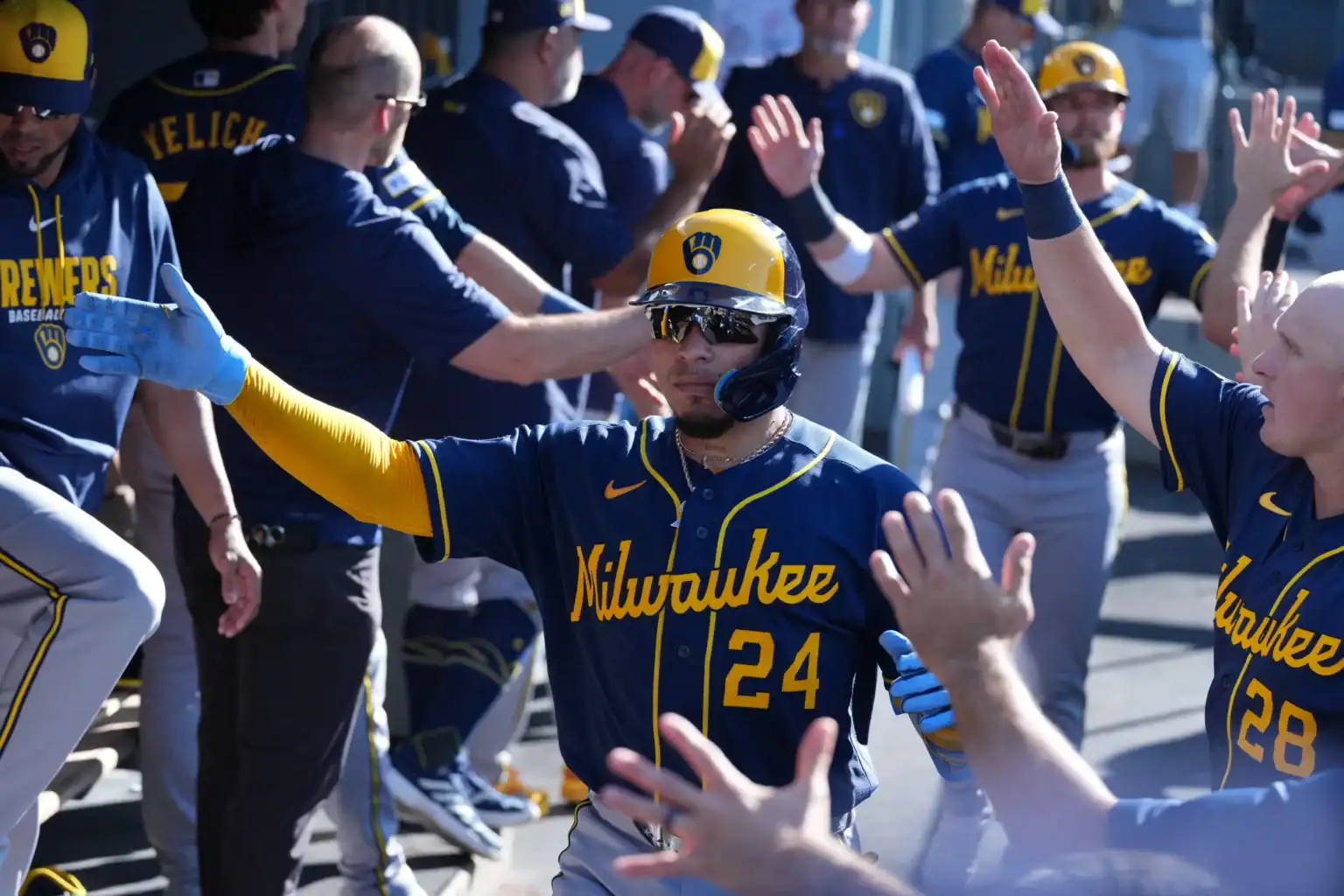
With three weeks remaining in the 2026 MLB regular season, Milwaukee owns baseball’s best record, the Dodgers are trying to keep a battered superteam intact, both East divisions remain unsettled and several historic individual chases are entering their decisive stages.
All records and statistics are through games completed on September 5, 2026.
September has arrived, and Major League Baseball has reached the point at which every result starts changing the shape of October.
The Milwaukee Brewers have established themselves as the team everyone else is chasing. The Los Angeles Dodgers have constructed perhaps baseball’s most intimidating pitching staff but are simultaneously dealing with a major Shohei Ohtani health question. The Tampa Bay Rays are trying to finish a remarkable run to the American League’s No. 1 seed while the New York Yankees remain close enough to make the AL East uncomfortable.
Elsewhere, the Chicago White Sox are attempting to complete one of the sport’s most dramatic turnarounds, Houston is leading an AL West that has refused to produce a dominant club, and the National League Wild Card race could literally come down to Arizona and San Diego playing one another on the final weekend.
And away from the standings, history remains within reach. Pete Crow-Armstrong is one home run from 40 while pursuing a 40-homer, 40-steal season. Yordan Alvarez still has a legitimate chance at a Triple Crown, although that chase suddenly became much more complicated over the weekend.
These are the MLB storylines that matter most entering September 6.
Milwaukee has quietly become the standard everyone else is chasing
The most important number in baseball right now is not attached to Los Angeles, New York or Atlanta.
It belongs to Milwaukee.
The Brewers enter September 6 at 88-55, the best record in Major League Baseball. They have scored 718 runs and allowed only 546, producing an MLB-best +172 run differential. Their underlying record based on runs scored and allowed is virtually identical at 89-54, an important distinction: Milwaukee has not built this lead by surviving an unusual number of one-run games or dramatically outperforming its run production. The Brewers have played like an elite team because, statistically, they have been one.
That makes Milwaukee one of the most intriguing October teams because its strength is collective rather than dependent on one overpowering superstar.
Young players have continued to enter the lineup without destabilizing it. Twenty-one-year-olds Cooper Pratt and Luis Lara, for example, have gone from Triple-A teammates to meaningful contributors in a pennant race. Earlier this summer they became the first pair of Brewers aged 21 or younger to combine for six RBIs in the same game.
The Cubs remain dangerous behind Milwaukee, but at 81-62 they are 7½ games back in the NL Central. Chicago actually has an excellent +139 run differential of its own, making the division stronger at the top than the gap alone suggests.
Still, the larger September question has changed.
It is no longer whether Milwaukee can win its division. It is whether the Brewers can hold off the Dodgers, Braves and Rays for baseball’s best overall regular-season record — and then turn six months of consistency into October success.
The Dodgers built an October monster, but Shohei Ohtani’s health has become the variable they cannot control
On paper, Los Angeles should terrify every potential postseason opponent.
The Dodgers are 85-57 with a +150 run differential, only 2½ games behind Milwaukee for MLB’s best record. And at the trade deadline, a rotation already loaded with talent added two-time Cy Young Award winner Tarik Skubal.
Los Angeles acquired Skubal from Detroit on August 2 for outfielder Zyhir Hope and right-handers River Ryan and Brady Smith. At the time of the trade, Skubal had a 2.79 ERA in 16 starts despite missing time earlier in the season following a procedure to remove loose bodies from his throwing elbow.
Through his September 3 start, Skubal carried a 2.86 ERA with 159 strikeouts in 132⅓ innings for the season. Pair that kind of arm with Yoshinobu Yamamoto and the rest of the Dodgers’ available pitching, and Los Angeles has the ingredients to shorten a postseason series very quickly.
But the biggest Dodgers story entering September 6 is not another acquisition.
It is Ohtani’s availability.
Ohtani missed the starting lineup for a third consecutive game Saturday as Los Angeles continued to manage issues involving his left knee, right biceps and neck. He has not pitched since July 3. The Dodgers have publicly discussed whether an injured-list stint is necessary, and there is currently no firm timetable for his return to the lineup.
The numbers show why the Dodgers have reason to be cautious. Since restarting a throwing program on August 8, Ohtani had hit .204 with a .704 OPS through the latest update. For the season he still owns a .906 OPS with 30 home runs while having posted a 1.79 ERA across 14 pitching starts.
The Dodgers do not need Ohtani to pitch in order to contend for another championship.
They probably do need a healthy version of Ohtani at the plate.
That difference could become one of October’s defining variables.
Tampa Bay is winning the AL East — but the Yankees have the underlying numbers to keep the race alive
Few standings offer a more interesting statistical contrast than the AL East.
Tampa Bay is 85-57, four games ahead of the 81-61 Yankees. The Rays have won seven of their last 10 games and own the best record in the American League.
Yet their run differential tells a different story.
Tampa Bay has scored 641 runs and allowed 592, a +49 differential. Its expected record based on those totals is just 76-66. New York, by comparison, owns a +118 differential and an expected record of 84-58.
In other words, Tampa Bay has consistently converted close games and high-leverage situations into victories at a rate its overall run production would not predict, while the Yankees have played more like an 84-win team than an 81-win club.
At this point, however, expected victories no longer matter. Actual victories do.
The Rays have them.
They also have Junior Caminero, who hit his 38th home run Saturday against Jacob deGrom to move ahead in the American League home-run race.
Boston remains relevant at 78-65, but the battle for first place has increasingly become Tampa Bay against New York.
The Yankees have enough time to close four games. They do not have enough time to waste many opportunities.
From 121 losses to first place: the White Sox turnaround has become impossible to ignore
Two years ago, the Chicago White Sox lost 121 games, the most by any MLB team in the Modern Era.
On September 6, 2026, they wake up in first place.
Chicago is 74-68, holding a 2½-game advantage over Cleveland in the AL Central. It is difficult to overstate the scale of the organizational transformation required to move from the most losses recorded by a modern MLB club to meaningful September baseball in such a short period.
The offense has been central to the change.
Chicago has scored 670 runs, and an organization that entered 2026 determined to increase bat speed has turned itself into one of baseball’s more dangerous power attacks. The White Sox had MLB’s lowest average bat speed in 2025 at 70.9 mph before implementing an offseason training program centered on weighted bats and increased swing velocity.
The transformation can be seen throughout the lineup.
On Saturday, Munetaka Murakami hit his 30th home run and Colson Montgomery hit his 31st despite Chicago’s 6-4 loss to Minnesota.
The White Sox are not running away with the Central. Cleveland remains close enough that one bad week could erase the advantage.
But Chicago has already moved beyond being a feel-good rebuild story.
The question is now whether this team can finish the job and host postseason baseball.
That sentence would have sounded absurd in September 2024.
Houston could win a division despite being outscored — and that tells you everything about the AL West
Then there is the strangest division race in baseball.
Houston leads the AL West at 73-70. Texas is 70-73. Seattle is 66-77.
No one has separated.
More remarkably, the Astros have been outscored by 37 runs, 682-645. Their expected record is 68-75 — five games worse than their actual mark. Yet if the postseason began today, Houston would enter as a division champion while clubs with considerably stronger records elsewhere in the American League would be fighting for Wild Card position.
Houston has at least begun to stabilize after a turbulent season. The Astros were 53-38 over a stretch beginning May 22 entering Saturday and recently produced one of their strongest runs of the year. Josh Hader has again become a major late-inning weapon, collecting his 250th career save on September 4.
Still, the division remains vulnerable.
Texas sits only three games behind. Houston’s negative run differential suggests the Astros have little margin for extended poor play, and September still includes games against postseason-caliber opponents.
The AL West may ultimately produce one of the season’s most unusual outcomes: a division champion that spent much of the summer simply trying to get safely above .500.
Braves-Phillies has turned September into a seven-game mini-playoff
The National League East is far more conventional.
It is also far more explosive.
Atlanta leads Philadelphia by four games, 84-58 to 80-62, after the Phillies answered an opening loss in their current series with a 4-2 victory Saturday.
Zack Wheeler struck out nine while allowing only one run in six innings, and Kyle Schwarber launched his MLB-leading 41st home run.
The standings alone would make this a significant race. The schedule makes it considerably bigger.
Atlanta and Philadelphia entered this stretch with seven head-to-head games in a span of 10 games. After splitting the first two, five remain.
That creates unusual leverage for early September.
A four-game divisional lead is comfortable when two contenders barely see one another. It is much less comfortable when nearly every night gives the trailing club a direct opportunity to remove a game from the deficit.
The stakes also extend beyond the division banner.
Milwaukee and Los Angeles are competing for the National League’s top postseason seeds, and winning the East could be the difference between receiving a Division Series bye and immediately entering the volatility of a best-of-three Wild Card Series.
For Atlanta and Philadelphia, October has effectively started early.
Arizona and San Diego are heading toward a potentially spectacular final weekend
The NL Wild Card race may produce the cleanest September drama of all.
The Cubs, at 81-62, have established some separation in the top Wild Card position.
Behind them, almost nothing is settled.
Arizona enters September 6 at 75-68. San Diego is 74-68, only half a game behind the Diamondbacks for the final playoff berth. Miami, despite slipping below .500 at 71-72, remains four games out.
San Diego had an opportunity to build momentum Friday when Luis Campusano launched a walk-off home run against the Yankees in the 10th inning. One day later, New York answered with a 5-1 win, dropping the Padres back behind Arizona.
That constant exchange of positions may continue for another three weeks.
And MLB’s schedule-makers could not have created a better ending.
Arizona and San Diego are scheduled to meet at Petco Park during the final weekend of the regular season, September 25-27. They entered September tied 5-5 in the season series, meaning that final series could simultaneously decide the Wild Card berth and the head-to-head tiebreaker.
A Game 162-style finish is not something baseball can guarantee.
This year, the NL Wild Card race has a legitimate chance to deliver one.
Pete Crow-Armstrong is one swing from 40 homers — but 40-40 will require a September sprint
Pete Crow-Armstrong does not need an awards discussion to make his season historic.
The numbers already do that.
The Cubs center fielder has reached 39 home runs and 33 stolen bases, along with 105 runs scored and a .945 OPS.
That leaves him one home run and seven steals from a 40-40 season.
Only six players in MLB history entered 2026 having reached 40 homers and 40 stolen bases in the same season, with Shohei Ohtani becoming the most recent when he shattered the barrier and went 50-50 in 2024.
The home-run portion appears likely. Crow-Armstrong hit No. 39 on September 3 against Milwaukee.
The steals are the harder half of the equation.
Seven stolen bases in approximately three weeks is realistic for a runner of Crow-Armstrong’s ability, but it will require both opportunities and aggressiveness. Chicago also has every incentive to prioritize winning games over individual milestones while protecting its Wild Card position.
Crow-Armstrong’s season has also become much larger than the traditional power-speed combination. His elite center-field defense gives Chicago value even on nights when the bat is quiet.
A 40-40 season from one of baseball’s premier defensive center fielders would be one of the more unusual all-around statistical campaigns the sport has produced.
The countdown is now officially on.
Yordan Alvarez’s Triple Crown chase just became much harder
Houston’s playoff race is not the only history watch surrounding the Astros.
Yordan Alvarez entered September with a realistic opportunity to become the first American League Triple Crown winner since Miguel Cabrera in 2012.
Four days into the month, the margins have tightened.
Alvarez has 37 home runs and 94 RBIs while batting around .315. He still controls the batting-average race, but Tampa Bay’s Junior Caminero moved ahead of him with his 38th homer Saturday. Baltimore’s Pete Alonso has reached 94 RBIs as well.
The timing is particularly interesting because Alvarez’s power production has cooled.
He hit only two home runs in August, and MLB’s current splits show just two homers over his last 30 games.
That does not eliminate the possibility of a Triple Crown. It does change the chase from “protect three leads” to “reclaim at least one.”
There is a larger historical target as well.
No player has led the entire Major Leagues — not just one league — in batting average, home runs and RBIs since Mickey Mantle in 1956. Alvarez held that extraordinary possibility earlier this summer, although Schwarber’s surge to 41 home runs and the emergence of rookie Sal Stewart atop the RBI leaderboard have effectively closed that route.
The AL version remains very much alive.
Every Alvarez home run from here could change two races simultaneously: Houston’s pursuit of the AL West and one of baseball’s rarest statistical chases.
The 2026 rookie class is becoming a storyline of its own
The best rookie seasons are no longer confined to one league or one type of player.
Detroit’s Kevin McGonigle has combined advanced plate discipline with premium overall value. Through the beginning of September he led AL rookies in on-base percentage and hits and carried one of the lowest strikeout rates among qualified rookies.
Cleveland left-hander Parker Messick has attacked the race from the mound, reaching 11 wins with an ERA in the mid-2.00s and more than 160 strikeouts by the start of September.
Chicago has Murakami supplying 30-homer power in his first MLB season.
And in Cincinnati, Sal Stewart has produced one of the most unusual rookie offensive seasons in franchise history. Stewart became the first Reds rookie ever with 30 home runs and 100 RBIs and only the second Cincinnati rookie to reach 30 homers, joining Frank Robinson’s 38-homer season in 1956.
He had already reached 31 homers and 105 RBIs entering play Thursday, giving him a chance to become only the third rookie after Ted Williams in 1939 and Walt Dropo in 1950 to lead the Majors in RBIs.
Individual awards will eventually sort themselves out.
The more lasting takeaway may be that several organizations have discovered players capable of becoming foundational pieces almost simultaneously.
ABS has quietly changed late-game strategy — and October will put it under a microscope
One of the most consequential changes to the 2026 season is no longer particularly controversial.
That may be the biggest sign that it has worked.
MLB introduced the Automated Ball-Strike Challenge System this season, allowing teams to challenge selected ball-strike calls while leaving the home-plate umpire responsible for calling pitches in real time. Each team begins with two challenges and retains a challenge following a successful appeal.
Through early September, there had been more than 9,000 ABS challenges, with roughly 54% resulting in overturned calls. Catchers have been particularly effective, succeeding on approximately 59% of their challenges.
That is not trivia anymore.
As the leverage of each plate appearance increases, knowing when to challenge — and knowing when not to burn one — becomes a genuine competitive skill.
Philadelphia offered a perfect September example Saturday when J.T. Realmuto successfully used an ABS challenge during Wheeler’s difficult first inning against Atlanta, helping the Phillies escape a bases-loaded situation without allowing a run. Philadelphia eventually won 4-2.
Now imagine the same decision in the ninth inning of a tied postseason game.
The ABS system has spent five months becoming ordinary.
October is when it can become unforgettable.
The Mets have become the cautionary story of the 2026 season
Not every major September storyline involves a contender.
The New York Mets are 64-78, 20 games behind Atlanta in the NL East and 10½ games out of a Wild Card position. Their -50 run differential reflects a season that has moved well beyond a temporary slump.
Saturday’s 9-5 loss to a 59-win Giants club was another reminder of how far the season has drifted. Rafael Devers and Christian Koss each homered twice as San Francisco handed New York its 78th defeat.
Injuries have mattered. Juan Soto and Francisco Lindor rarely shared the lineup during portions of the first half, with both dealing with physical problems. At one point in late June, the Mets had played only seven full games all season with both stars in the lineup.
But a season this disappointing cannot be explained entirely through injuries.
September has already shifted toward evaluation. Young pitchers and position players are being given opportunities while the organization begins making decisions about 2027.
For a club built to contend immediately, that represents one of the sharpest changes of direction anywhere in baseball.
The final three weeks could completely reorder October
The postseason field may look relatively established from a distance.
It is not.
Milwaukee leads baseball, but Los Angeles is only 2½ games behind. Tampa Bay leads New York by four in the AL East. Atlanta leads Philadelphia by four with five head-to-head games still to play. Chicago’s improbable hold on the AL Central remains vulnerable to Cleveland. Houston leads Texas by three despite carrying a negative run differential. Arizona and San Diego are separated by half a game.
And those are only the standings.
Ohtani’s health could dramatically alter the Dodgers’ postseason ceiling. Crow-Armstrong is chasing 40-40. Alvarez is trying to recover ground in a Triple Crown pursuit. One of the strongest rookie classes in recent memory continues to accumulate historic numbers. The new ABS system is about to experience postseason pressure for the first time.
September baseball is often described as the final chapter of the regular season.
In 2026, that description feels too passive.
The final three weeks are not simply going to decide who qualifies for October.
They could determine what kind of October we get.