Manfred Says No MLB Labor Deal Without Salary Cap and Floor
Rob Manfred says MLB owners insist on a salary cap and floor, escalating the labor standoff ahead of a possible December 2 lockout.
 World Baseball News Editorial Team , 2 min read
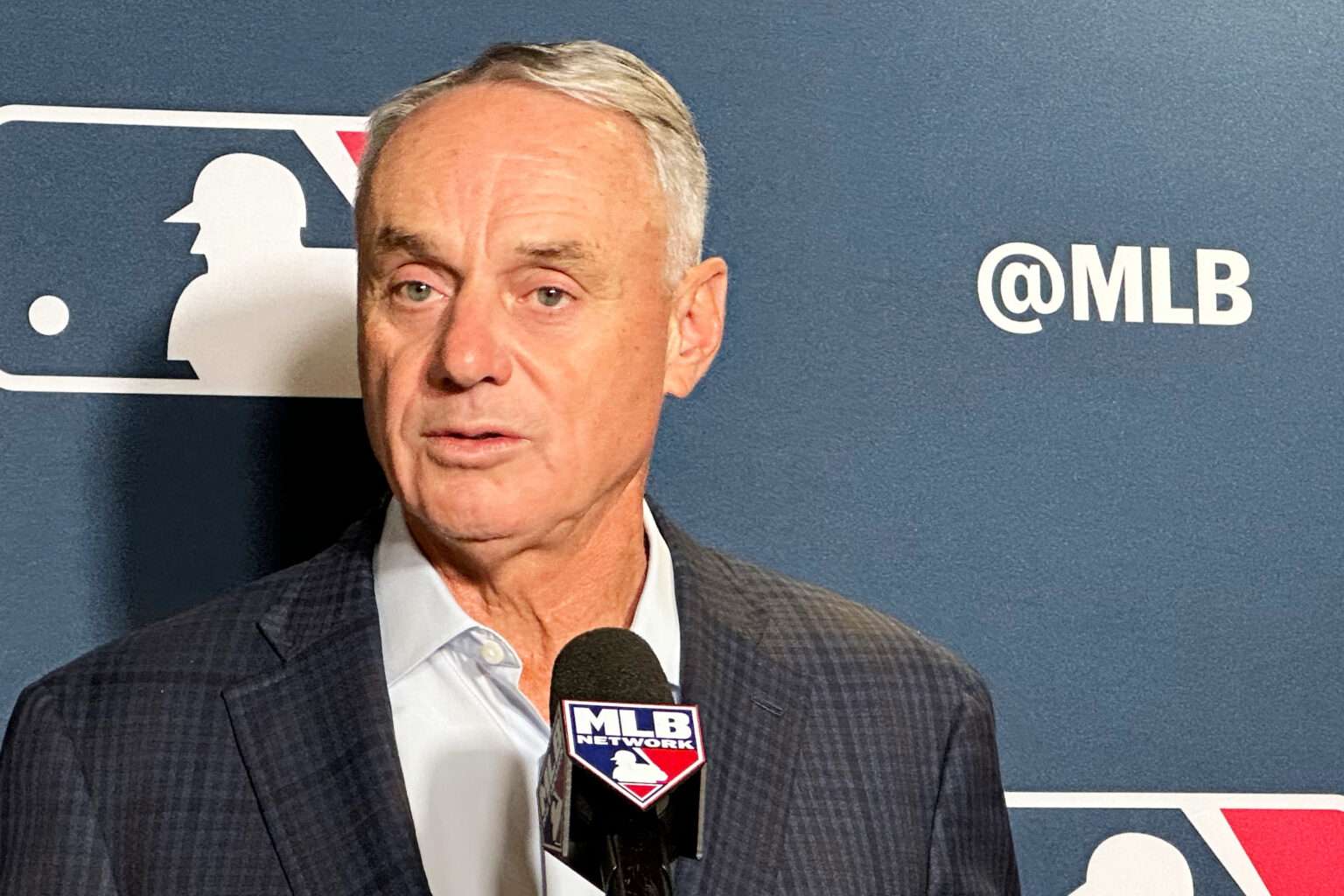
Major League Baseball’s labor talks moved closer to a December lockout after commissioner Rob Manfred said all 30 owners support a salary cap and payroll floor and that he cannot envision them approving a new collective bargaining agreement without both. The current CBA expires at 11:59 p.m. ET on December 1, leaving less than two weeks to bridge a fundamental divide with the MLB Players Association.
A lockout beginning December 2 would freeze major-league trades and free-agent signings. It would not immediately cancel games, but an extended shutdown could disrupt spring training and threaten the start of the 2027 season.
Owners make salary cap their defining demand
MLB’s latest framework calls for a $258.2 million hard cap and a $180.2 million payroll floor beginning in 2028. Manfred said the owners are unanimous behind the proposal and described the cap-and-floor system as the central condition of any agreement.
The league says its plan would split revenue evenly between owners and players, raise the minimum salary, increase the pre-arbitration bonus pool and provide earlier free agency for some players. Individual contracts would also be limited to 15% of a club’s payroll, or 16% when a team re-signs one of its own free agents.
MLB estimates that, using 2026 payrolls, 12 clubs would need to add a combined $636 million to reach the proposed floor. Eight teams would need to cut a combined $528 million to comply with the cap. The Los Angeles Dodgers alone would be $174 million above the proposed limit, according to the league’s calculations.
MLBPA remains firmly opposed
The players’ union views a hard cap as an unacceptable restriction on salaries and guaranteed contracts. Interim executive director Bruce Meyer said the proposal would reduce player compensation and fundamental bargaining rights while increasing franchise profits and values.
The MLBPA has instead proposed changes within the existing economic system, including a higher competitive balance tax threshold, a larger minimum salary, earlier free agency for certain players and a competitive integrity tax aimed at teams with especially low payrolls.
That leaves the sides divided not only over the size of a cap or floor, but over whether the sport should adopt that structure at all. Owners are presenting the system as a competitive-balance measure; the union argues it would primarily control labor costs.
December 1 deadline carries global consequences
Manfred said MLB will continue bargaining and that his overriding objective remains an uninterrupted 162-game season. He added that owners will make a final lockout decision as late as possible.
The approaching deadline already affects more than the domestic free-agent market. Posted players from Nippon Professional Baseball and the KBO must complete MLB contracts before a work stoppage halts signings, compressing negotiations for several leading Asian players.
Baseball’s previous lockout began in December 2021 and ended on March 10, 2022, allowing the league to preserve a full schedule after delaying spring training. The stakes are higher this time because the cap dispute reaches the foundation of MLB’s economic model. The last direct ownership push for a salary cap contributed to the 1994-95 strike and the cancellation of the 1994 World Series.
With both sides publicly dug in, the remaining bargaining sessions will determine whether the offseason continues normally or MLB enters its 10th work stoppage since 1972.