Hoofdklasse Power Rankings 2027: Can Anyone Challenge Neptunus?
2027 Hoofdklasse power rankings for all seven Dutch baseball clubs, based on 2026 results, proven player quality and offseason transfers.
 World Baseball News Editorial Team , 6 min read
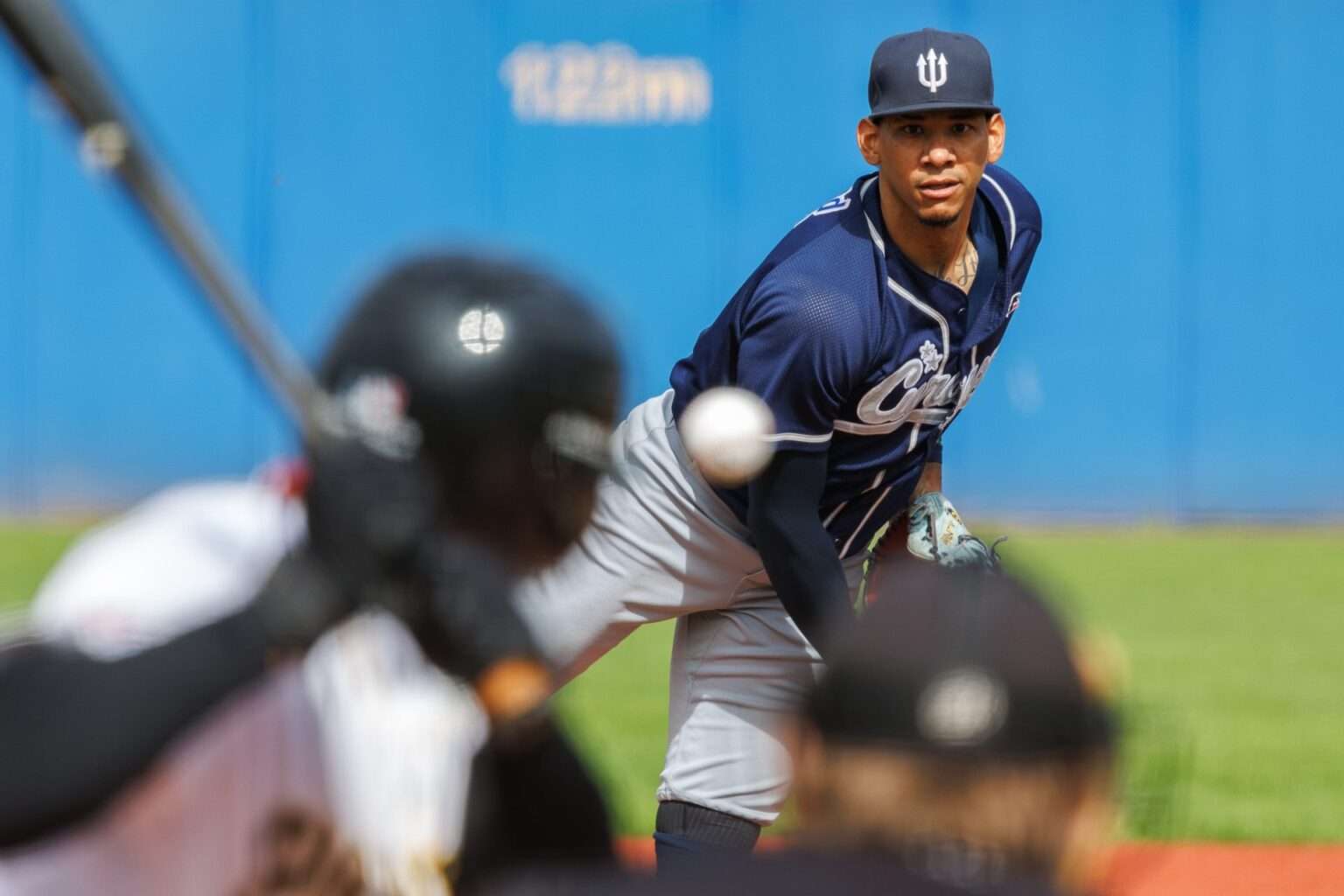
Rotterdam Neptunus are the clear favorites to win the 2027 Honkbal Hoofdklasse, but the race behind the Dutch champions could be much closer. After a 33–3 regular season and a four-game Holland Series sweep of Amsterdam Pirates in 2026, Rotterdam have the strongest established core. HCAW’s acquisition of Alex Madera, however, gives the middle of the league a different look.
These preseason power rankings weigh the quality of returning players, verified 2026 results, pitching depth and the likely value of confirmed transfers—not the number of names on a transfer list. They are projections, not predictions of an exact final table.
2027 Hoofdklasse Power Rankings
| Rank | Team | 2026 W–L–T | 2026 run differential |
|---|---|---|---|
| 1 | Rotterdam Neptunus | 33–3–0 | +189 |
| 2 | Amsterdam Pirates | 30–6–0 | +129 |
| 3 | Oosterhout Twins | 19–17–0 | +5 |
| 4 | Bussum HCAW | 13–23–0 | −7 |
| 5 | Haarlem Kinheim | 18–17–1 | +39 |
| 6 | Utrecht UVV | 5–31–0 | −154 |
| 7 | Hoofddorp Pioniers | 7–28–1 | −201 |
Records and run differentials are from the 2026 regular season. The order is our editorial projection for 2027.
1. Rotterdam Neptunus — The benchmark remains intact
Neptunus outscored their opponents 262–73 in the 2026 regular season, then swept Pirates to claim the Dutch championship. The numbers describe a club that was not simply winning close games: it controlled both sides of the ball. Christian Diaz was named the 2026 league MVP after batting .472 with 60 hits and 43 RBIs in the regular season, while Juan Carlos Sulbaran won the league’s top pitcher award after going 10–0 with a 1.22 ERA. Those two award-winning performances help explain why Rotterdam begin 2027 on a different tier. There are real departures: Tom de Blok and Chris Stuart have retired, Arthur Bonevacia is leaving to coach HCAW, and Bob van der Meer joins Kinheim. But incoming Brandon Herbold, Gillian Wernet, Gedionne Marlin and Faas Sluijter give manager Greg Muller options to replace some of that depth. The overseas credentials of the newcomers are intriguing, though they are not a substitute for results in the Dutch league. Neptunus remain No. 1 because their proven foundation is overwhelmingly strong, not because of any particular offseason signing.
2. Amsterdam Pirates — Elite, but still chasing Rotterdam
Thirty wins in 36 regular-season games would make Pirates the favorite in most leagues. In 2026 it left them three games behind Neptunus, and the Holland Series ended in a 4–0 defeat. Amsterdam’s challenge is to narrow that gap while replacing Alex Madera, who has joined HCAW. Madera’s ability to reach base, hit for average and create pressure on the bases makes his departure more significant than a routine roster change. Connor Prins arrives from Paderborn and Sheadion Louisa joins from HCAW, but neither acquisition alone demonstrates that the lineup has improved. Daan Hijzelendoorn also departs for UVV, although his limited recent workload makes that loss easier to absorb than Madera’s. The established Pirates pitching staff, led by players such as Lars Huijer, and the quality of their returning hitters still make them the obvious second choice. The central question is not whether Amsterdam can contend; it is whether they can find enough extra production to beat Rotterdam in a championship series.
3. Oosterhout Twins — Proven bats, unanswered pitching questions
Twins finished third at 19–17, but their +5 run differential showed how narrow their margin was over the league’s middle tier. The offense gives Oosterhout a credible starting point: Nando Mostaert and Rob Paller provided established power and on-base production in 2026. The roster changes are more mixed than a simple arrivals-versus-departures count suggests. Jamdrick Cornelia comes from the Ottawa Titans and Junior Martina returns after playing in Italy; both could improve the club, but their contribution in 2027 still has to be demonstrated on the field. Tygo Rojer and Nathan Makaya Richardson provide additional depth. Meanwhile Faas Sluijter moves to Neptunus, Stijn van der Schaaf joins UVV and Gijs van Zalingen has retired. Sven Hendrickx takes over as head coach. Twins have enough established offensive quality to retain third place in this projection, but they are much closer to HCAW and Kinheim than to the top two. Reliable innings from the rotation will determine whether they stay ahead.
4. Bussum HCAW — The strongest case for a jump
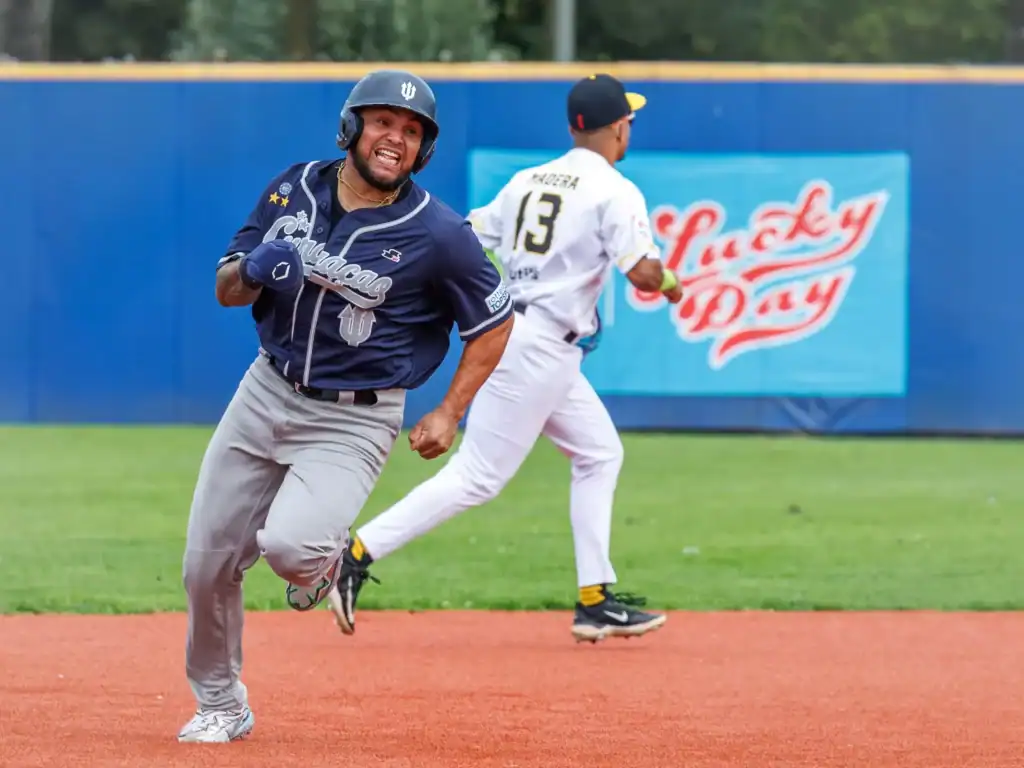
HCAW’s 13–23 record looks poor next to Kinheim’s, but a −7 run differential suggests the team was substantially more competitive than its win total. Its offseason additions also offer something more convincing than roster volume: demonstrable Hoofdklasse quality. Alex Madera arrives from Amsterdam Pirates, and Timothy Rojas comes from Pioniers. Both were productive regulars in 2026 and should improve HCAW’s lineup immediately. The club also adds Finn Kragt from Japan and has appointed former Neptunus player Arthur Bonevacia as head coach. Yet this is not a risk-free upgrade. Pitcher Gio de Graauw has left for Kinheim, Koen Ghijsen moves to UVV and Sheadion Louisa joins Pirates. Those departures put pressure on the remaining pitching staff. HCAW rank fourth because two proven offensive additions give them a plausible path to turning close defeats into wins. If the pitching cannot compensate for its losses, however, the club could easily finish behind Kinheim again.
5. Haarlem Kinheim — Last year’s fourth-place team deserves respect
Kinheim have a legitimate argument for ranking above HCAW. They finished 18–17–1 in 2026, outscored opponents by 39 runs and reached the playoff semifinals. Those are stronger results than Bussum produced, and the pitching foundation should not be dismissed. Gio de Graauw arrives from HCAW, Bob van der Meer comes from Neptunus and Divayo Jansen joins from DSS, giving Kinheim useful reinforcements. The uncertainty comes from the departures. Tom Stuifbergen is ending his playing career and moving into a pitching-coach role, while Arthur Gonthier, Daniel Vos, Lorenzo Willem and Sander van der Meer are among those retiring. Losing experienced players does not automatically mean losing equivalent production—each departure must be assessed individually—but the combined turnover creates questions about depth and continuity. Kinheim are fifth by a narrow margin, primarily because HCAW have added two immediately identifiable offensive difference-makers. A repeat of Kinheim’s 2026 finish would not be a surprise.
6. Utrecht UVV — More options, but the evidence for a leap is thin
UVV’s 5–31 regular season and 289 runs allowed reveal the scale of their challenge. The club has added numerous players, including Koen Ghijsen, Daan Hijzelendoorn and Stijn van der Schaaf, along with Keegan Pieternella and Keoni Coloma. Some arrivals have Hoofdklasse experience, others have played at different levels, and a few offer intriguing backgrounds. But experience is not the same as recent effectiveness. Ghijsen, Hijzelendoorn and Van der Schaaf did not establish themselves as dominant Hoofdklasse pitchers in 2026, so treating them as automatic solutions would be unjustified. The team also loses Jenseley Keyzer and Casper Urbanus to Pioniers. There is a route to improvement if new roles suit the incoming pitchers and the club develops greater consistency. That remains a possibility rather than a demonstrated upgrade. UVV rank sixth because their additions may make them more competitive, but their established player quality still trails the league’s middle group.
7. Hoofddorp Pioniers — A rebuild with a steep hill to climb
Pioniers won seven games in the 2026 regular season, two more than UVV, but their underlying performance was the weakest in the league. They scored only 112 runs and conceded 313, producing a −201 differential. That is an enormous gap to close in one offseason. Jelle van der Ham, Jenseley Keyzer, Tristan Kuijer and Casper Urbanus are among the incoming players, alongside several promotions from Pioniers 2 and other additions. These moves create pitching options, but there is limited evidence that they collectively provide the quality required to contain the league’s best offenses. The lineup also loses Timothy Rojas to HCAW and Cayro Hazel, who signed with the Toronto Blue Jays organization. Both departures matter because Pioniers can ill afford to lose established offensive production. Arquedion Muller brings an interesting professional-baseball background, but without recent competitive results his immediate impact is difficult to forecast. Pioniers may improve their record, yet the combination of a fragile pitching staff and significant offensive departures leaves them seventh for now.
The outlook: two favorites, three contenders for the middle
Rotterdam and Amsterdam are separated from the rest by more than reputation: their 2026 records and run differentials provide hard evidence of a substantial quality gap. The most uncertain positions are third through fifth. Twins have the advantage of proven hitters, Kinheim have a better recent record, and HCAW have added the kind of established bats that could change a team’s fortunes.
UVV and Pioniers both need improvement, but counting transfers is not a meaningful measure of how much stronger either club has become. The decisive question is how many of those players can deliver against Hoofdklasse opposition every week.
These rankings will change as rosters are finalized and the season begins. For now, the most defensible forecast is a familiar favorite at the top—and a much more interesting fight behind it.